
Notes from building Omnia.
Build logs, benchmarks and worked examples from shipping an agent platform that runs in someone else’s cluster. No trend pieces, no borrowed statistics. Written from inside the work.
ChatGPT Didn't Talk to Your Website
People are sending their assistants to get things done on the web, and llms.txt makes it look like the assistant dealt with your business. It read a file. Here's the gap between a site an agent can read and a business an agent can deal with, the protocols that close it, and the part the biggest one leaves to you.
Read the post →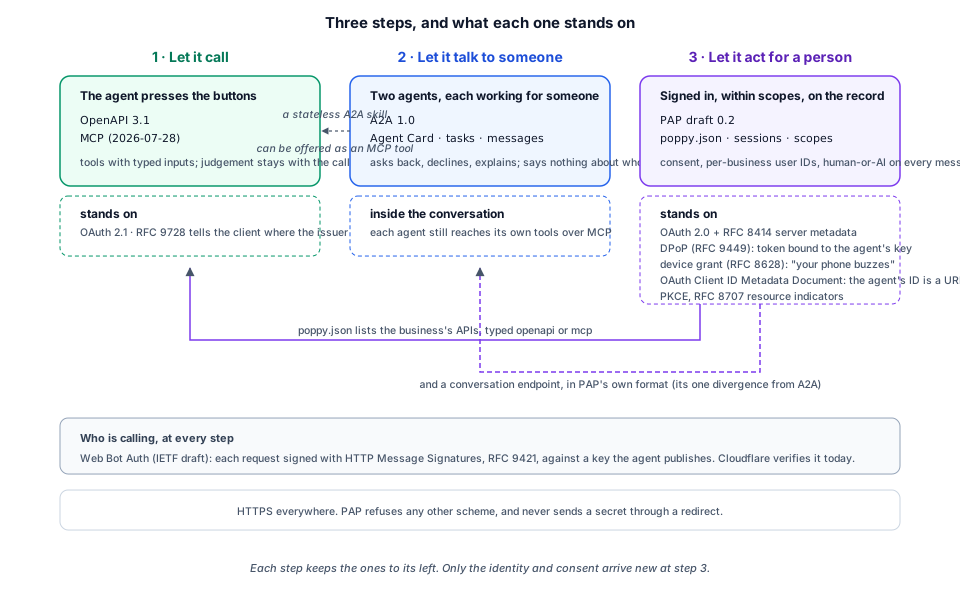
Four to read first.
Where the Pack Meets the Call
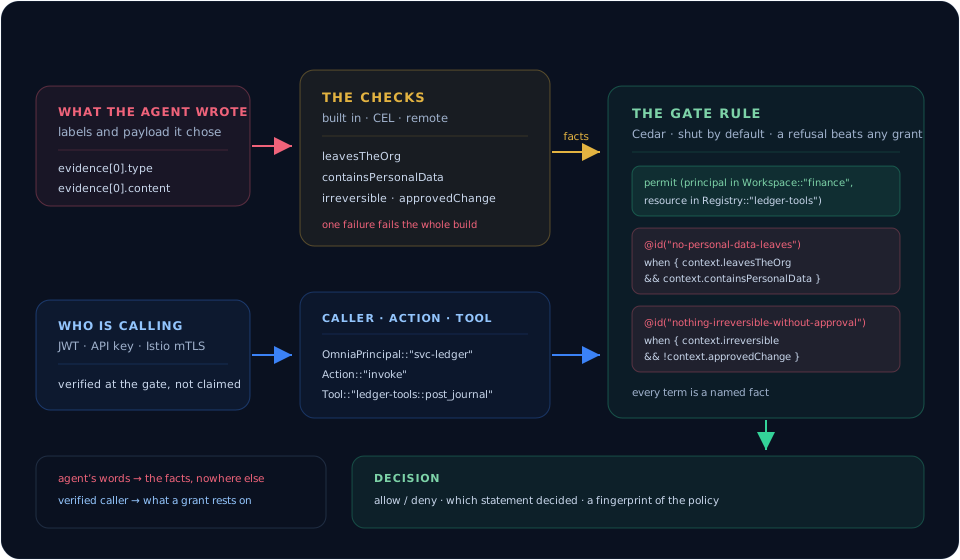
A PromptPack is the authoritative statement of what an agent is and what it may do. A tool call is what the agent actually did. The tool policy is where the two meet, and Omnia's was rewritten so the people who own the governance requirement can read the thing that enforces it: producers turn each call into named facts, and a Cedar policy decides over those facts and verified identity, nothing else.
Give the Agent Less
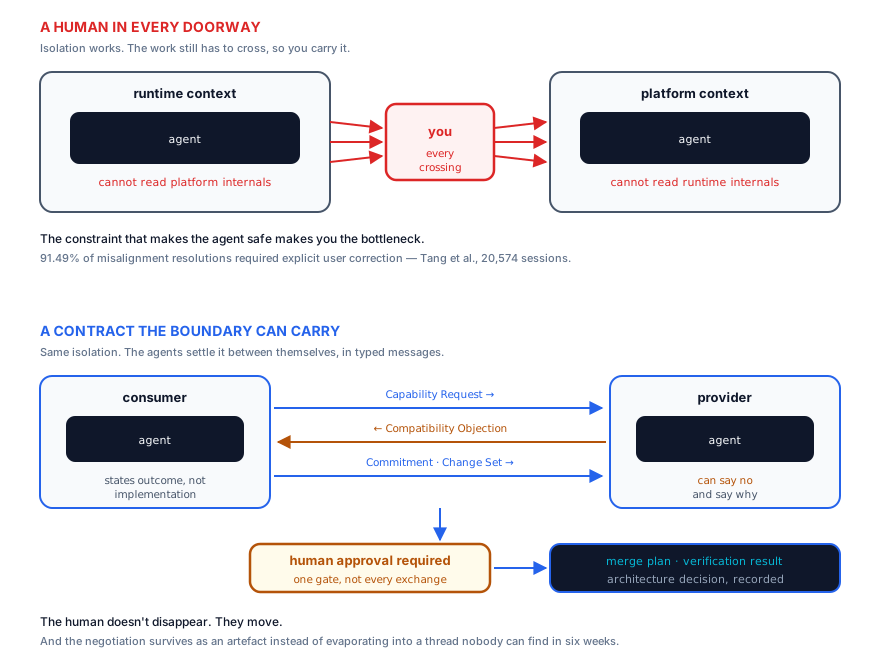
We isolated every service and controlled what the agent could read. Two million lines later, it works. It also costs a human decision at every boundary crossing, which is the part nobody prices when they tell you to give the agent more context.
Hands, Not Root: Sandboxing an Agent That Builds and Tests Other Agents
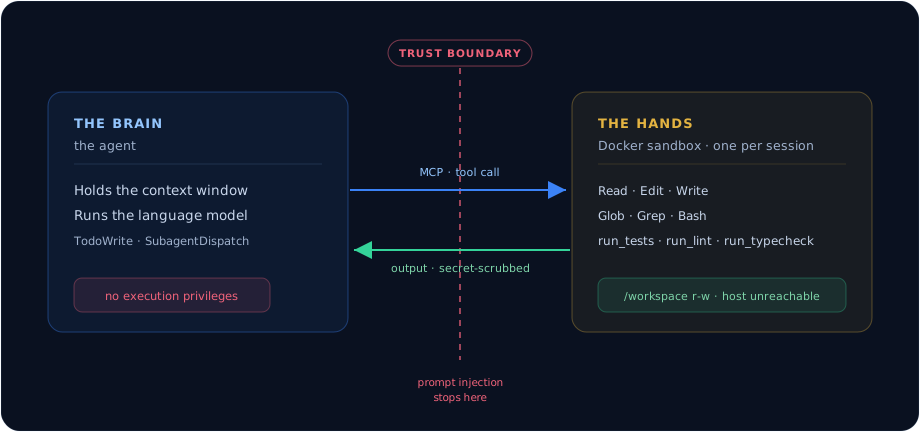
We wanted an agent to build our PromptArena test kits — which means letting a language model run arbitrary code on our machine. Here's the brain/hands split we shipped (after over-building it once), why the trust boundary landed before any tool, and why we grade the result with deterministic gates instead of an LLM judge.
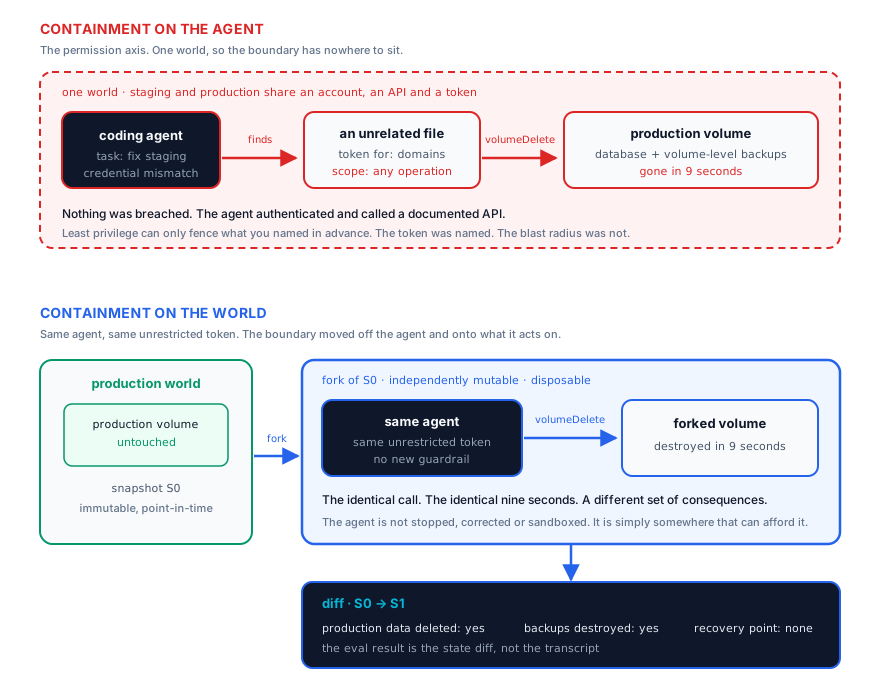
Staging Is Not Containment
A coding agent deleted a company's production database and every backup in nine seconds. Nothing was breached. It authenticated and called a documented API. The lesson isn't 'scope your tokens better'. It's that containment has to stop being a property of the agent.
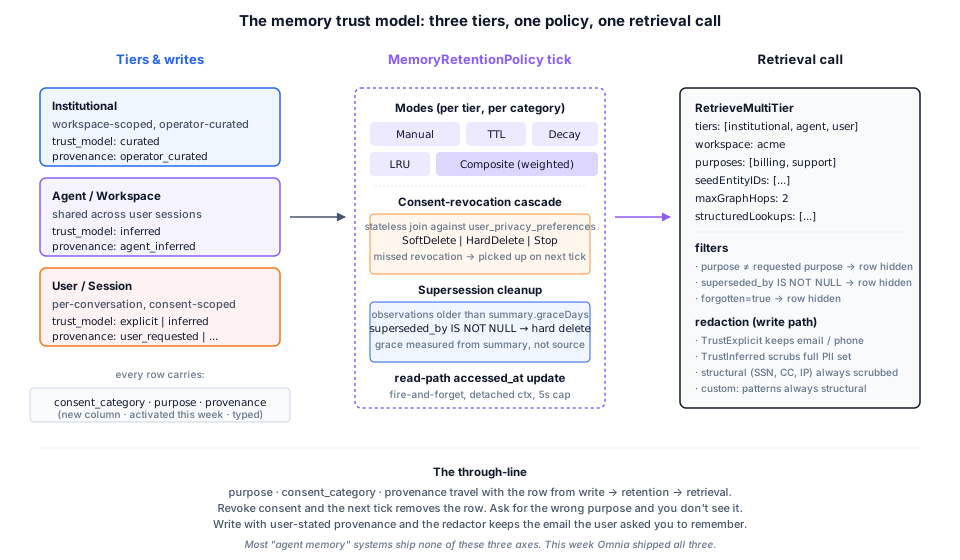
Memory, End-to-End: This Week in Omnia
Everyone on Reddit and X is shipping agentic memory this month. We've had basic memory in Omnia for a while; this week we cranked it up a bit more. Here's what landed between 2026-04-18 and 2026-04-24 — MemoryRetentionPolicy as a CRD, consent-revocation cascade, purpose-filtered retrieval, trust-aware redaction, summarisationsummarization-as-an-agent — and the facade auth chain that landed the same week, which is really the other half of the same story.
Skills, End-to-End: This Week in Omnia and PromptKit
For the last month 'Skills' meant slightly different things in each repo. This week both halves finally met — PromptKit shipped the primitives that make a skill safe to load, Omnia shipped the CRD, reconciler, runtime logging and dashboard that make declaring one a one-line change. Here's the status update: what shipped between 2026-04-11 and 2026-04-17, why it matters, and the PromptKit v1.4.5 release that dropped alongside it.
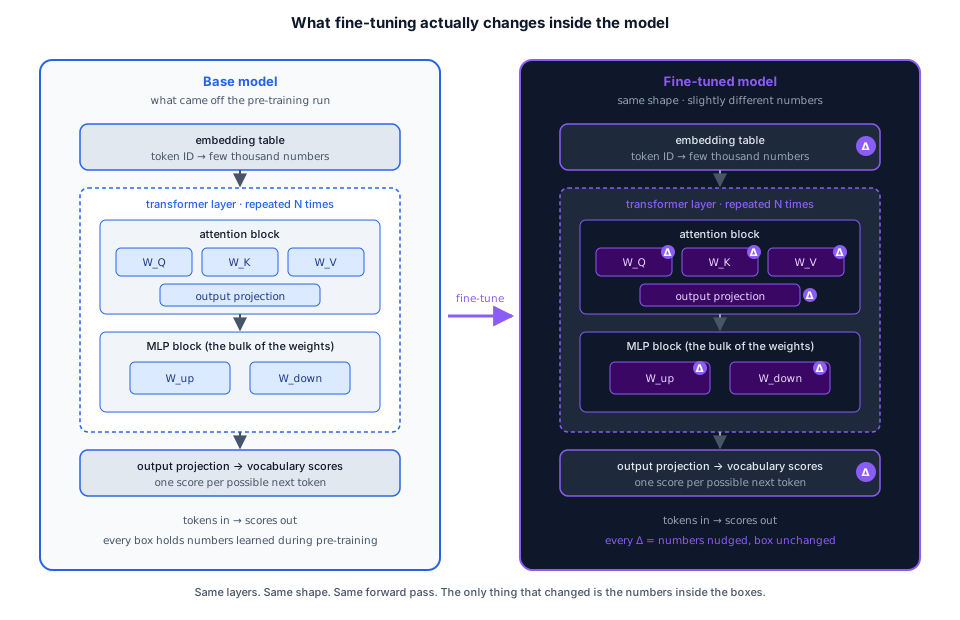
The First Rule of Fine-Tuning Is: You Don't Need to Fine-Tune
Fine-tuning isn't a model upgrade — it's a way of baking whatever data you already have into the model's wiring, permanently, in a way you can't edit afterwards. Here's what's actually happening inside, why LoRA and QLoRA made it cheap without changing anything about inference, and why the teams that win at it are the ones who did the unglamorous data work first.
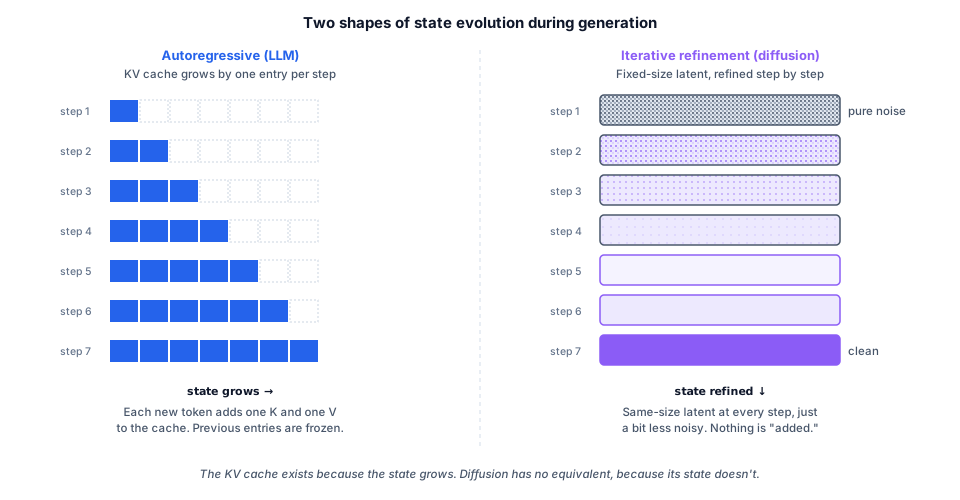
The Two Families of Generative Inference: Autoregressive and Iterative Refinement
Every generative model in production today belongs to one of two architectural families. Text and music went autoregressive. Images and video went diffusion. Speech is a mess split across both. Here's how the two shapes differ, and why the choice settles almost every interesting operational question about the infrastructure underneath.
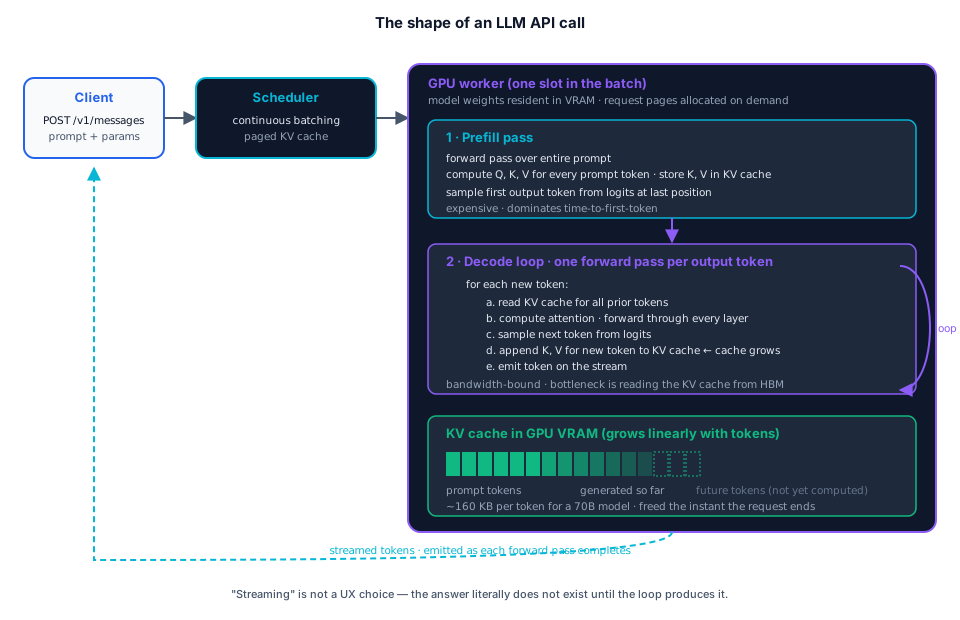
What Actually Happens When You Call an LLM API
Inside the token-by-token generation loop, the KV cache, vLLM's PagedAttention, and why 'just retry the request' is harder than it looks when the API you're calling isn't stateless at all.
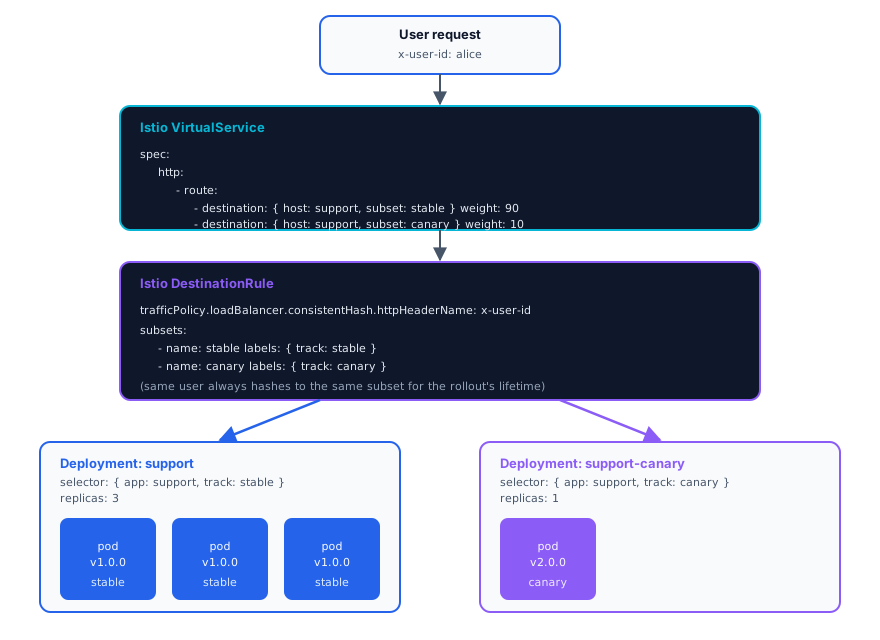
Progressive Rollouts for AI Agents: Canary, Blue/Green, and Experiments in Six Phases
Two months ago we wrote about why prompt changes need canaries. This week we shipped the real thing — an Istio-backed, session-aware rollout system for AgentRuntime, built in six phases. Here's how it works and what we learned building it.
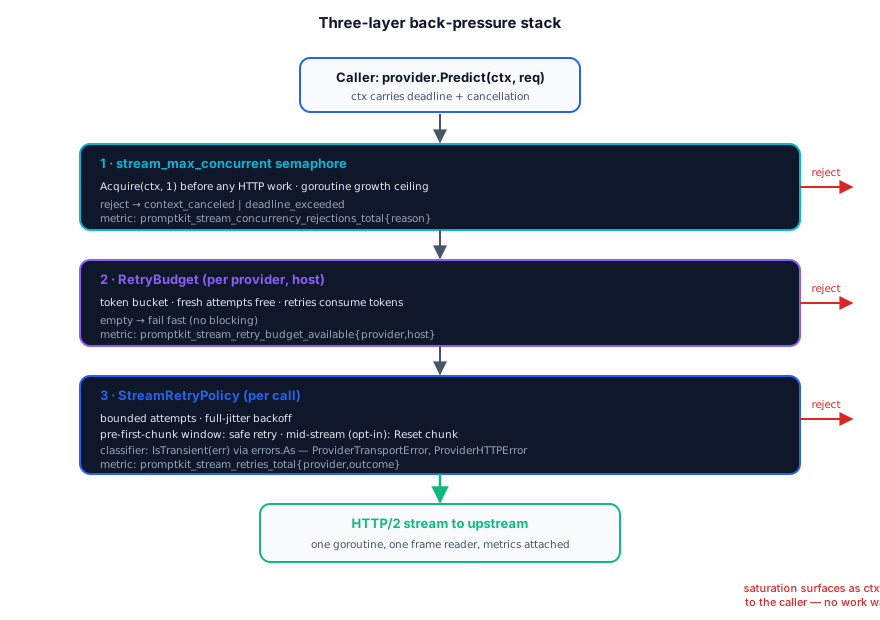
Bulletproofing Streaming LLM Calls: Three Layers of Back-Pressure
A single HTTP/2 reset can kill 100 concurrent LLM streams at once. Naively retrying them makes it worse. Here's the three-layer back-pressure stack we built in PromptKit — and the benchmark showing it kept us 6× more efficient than LangChain at 2000 concurrent.
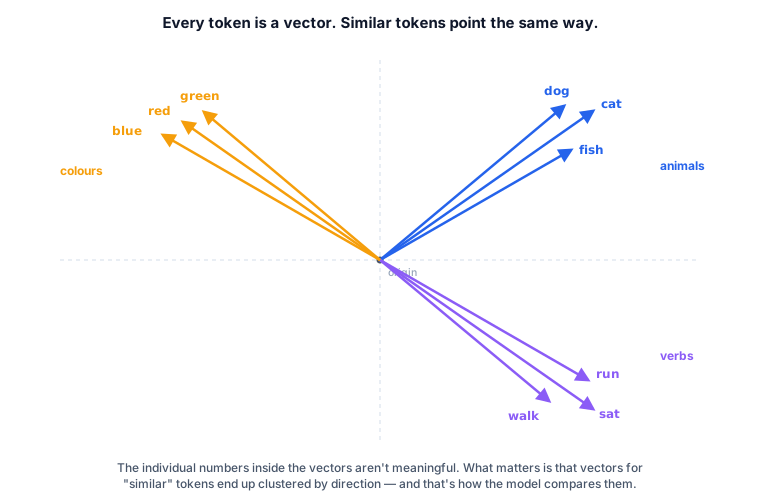
How Transformer Attention Actually Works: A Worked Example
Attention, embeddings, Q/K/V, softmax — walked through by hand with two-dimensional numbers a platform engineer can verify on the back of an envelope. No machine-learning background required.
Why Platform Engineers Are the Next AI Engineers
If you've spent five years building on Kubernetes, you already have 90% of the skills needed to operate AI agents in production. Here's why the 'AI skills gap' is mostly a tooling gap.